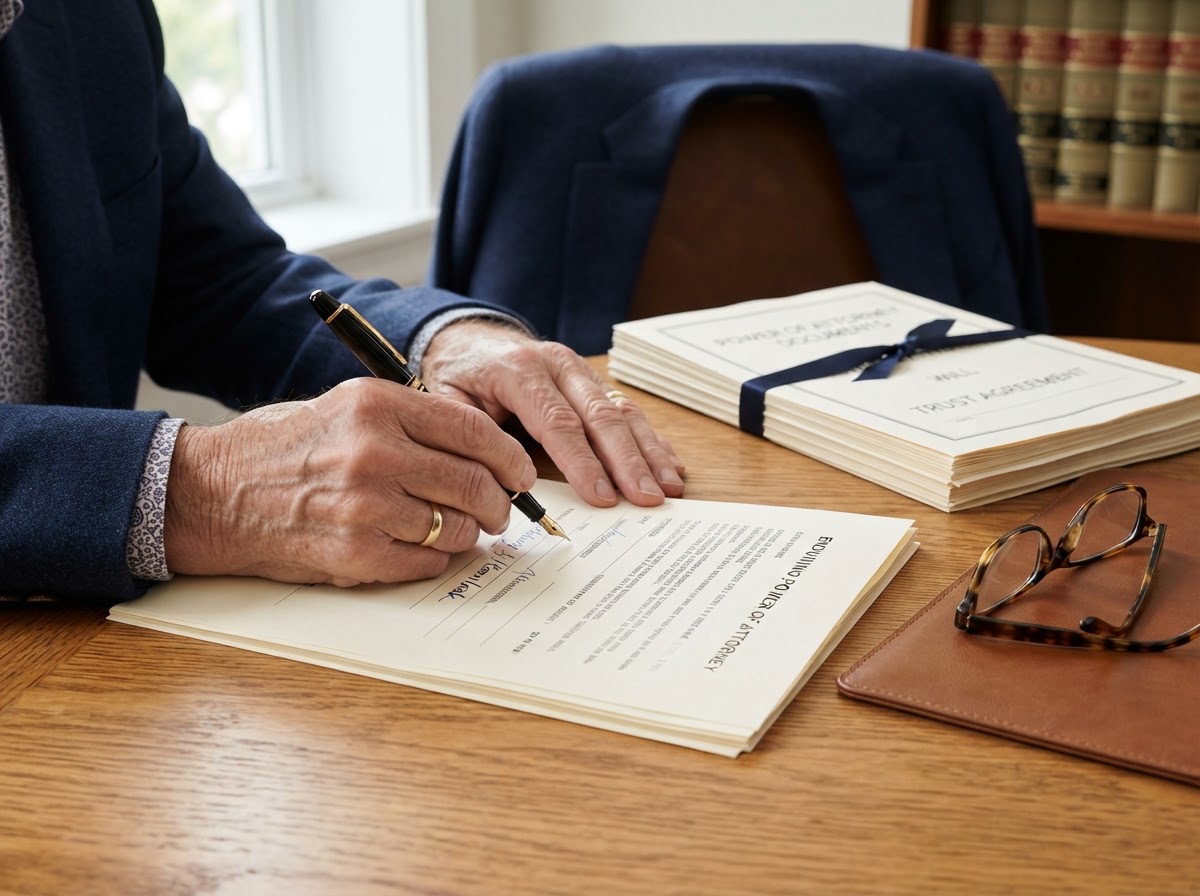
Estate planning isn't only about what happens after you pass away. Powers of attorney and guardianship protect you during your lifetime.
A Will only takes effect after you die. To protect yourself while you are alive but unable to make decisions — because of illness, injury, stroke, dementia or any other loss of capacity — you need enduring power of attorney and guardianship appointments in place. These documents are just as important as your Will, and in some ways more so, because they operate during your lifetime and affect you directly. Yet they are the estate planning documents most often overlooked by Australians, often with serious consequences for the people around them.
An enduring power of attorney authorises someone you trust — your attorney — to manage your financial and legal affairs if you lose the capacity to manage them yourself. 'Enduring' is the key word: it means the power continues to operate even after you lose the mental capacity to make your own decisions. A general (non-enduring) power of attorney, by contrast, ceases the moment you lose capacity — which is precisely when you most need someone able to act on your behalf. That distinction is why an enduring power of attorney is the document that matters for incapacity planning.
The scope of what an attorney can do under an enduring power of attorney is typically broad: managing bank accounts, paying bills, dealing with investments, selling or buying property, managing a business, and handling dealings with the ATO and other government bodies. You can tailor the document to restrict or expand these powers, to require that the attorney act jointly or only in consultation with others, or to limit the authority so that it only comes into effect if you lose capacity (rather than immediately on signing). These choices should reflect your circumstances and your comfort with the person you are appointing.
“The exact form and terminology of these documents differs between Australian states — and this is a point where local expertise matters. In New South Wales, for example, an enduring power of attorney covers financial and legal decisions, while an enduring guardian (appointed under a separate enduring guardianship document) makes accommodation, healthcare, lifestyle and medical decisions. In Queensland, a single Enduring Power of Attorney can cover both financial and personal and health matters. In Victoria, the model again differs, with a single enduring power of attorney able to cover financial, personal and medical decisions under a more recent framework. Western Australia and the other states each have their own instruments and requirements. The documents must be tailored to where you live and where your assets are held, and interstate recognition — while generally available for validly executed documents — has its own nuances.
The guardianship or lifestyle decisions are equally important. An enduring guardian (in NSW terminology) or the equivalent appointment in other states allows you to nominate who will make decisions about where you live, what medical treatment you receive, and other personal and lifestyle matters, if you cannot make those decisions yourself. Without this appointment, healthcare providers and family may have to rely on a statutory hierarchy of decision-makers, which may not reflect your wishes and may not appoint the person you would have chosen.
The practical consequences of not having these documents are significant. If you lose capacity without an enduring power of attorney in place, your family cannot simply step in and manage your affairs. They would typically need to apply to a tribunal or court — the NSW Civil and Administrative Tribunal, VCAT in Victoria, QCAT in Queensland, or their equivalents in other states — for the appointment of a financial manager or administrator. The process is slow, often taking months, it is stressful, it is public, and it can be expensive. It can also produce an outcome where a stranger or an unintended person is appointed to manage your affairs. A similar problem arises for medical and lifestyle decisions: without a guardian appointed, the people closest to you may find their ability to direct your care limited or disputed.
Choosing the right person to appoint is a decision that deserves careful thought. Your attorney and guardian will have significant power over your life and your assets at a time when you cannot supervise them. The right choice is someone who is trustworthy, who understands your values and wishes, who is financially responsible, and who is willing and able to take on the role. You can also appoint more than one person, to act jointly or jointly and severally, and you can appoint a substitute to act if your first choice is unable or unwilling to act. Many people also prepare a statement of wishes — not legally binding, but a valuable guide — to help their attorney and guardian understand how you would want decisions made.
It is also important to keep these documents under review. The person you appointed five years ago may have moved away, may no longer be suitable, or may have predeceased you. Your circumstances may have changed — a new relationship, a breakdown, a change in your assets or your health. We recommend reviewing your enduring power of attorney and guardianship appointments alongside your Will every few years, and whenever a significant life event occurs.
Putting these documents in place is one of the most caring things you can do for the people around you. It spares them the stress, delay and public process of a tribunal application at a time when they will already be under enormous pressure. It also gives you the reassurance that the person you trust will be the one making decisions on your behalf, in line with your values and wishes. As SAPEPAA-accredited advisers working alongside Abbott & Mourly Lawyers, we help Australians put enduring powers of attorney and guardianship documents in place that are valid, tailored to their state, and aligned with the rest of their estate plan. Book a Discovery Call to get started.